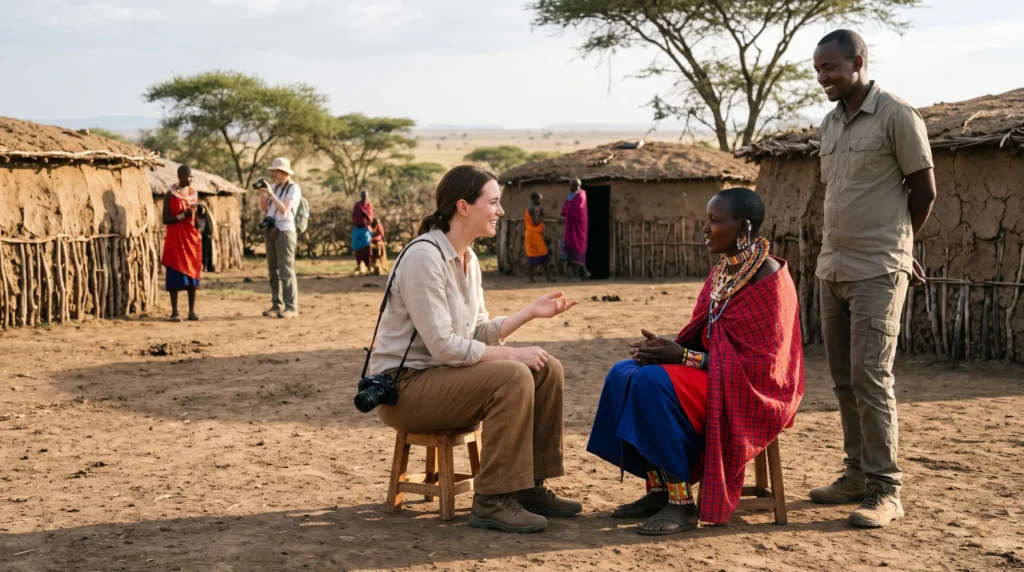
A truly successful expedition is measured not just by the photographs taken, but by the quality of the interactions with the host communities. East African culture is deeply rooted in ‘Ubuntu’—the philosophy that humanity is interconnected. Navigating this cultural landscape requires intentionality and grace.
Wardrobe Nuances in Public Spheres The transition from a secluded eco-lodge to a bustling rural market requires a shift in attire. While safari gear is functional in the bush, it can read as culturally insensitive in populated areas. Tanzanian society values modesty, heavily influenced by both Christian and Islamic traditions. When stepping into a village or a coastal town, travelers must ensure their shoulders and knees are covered. Flowing, breathable fabrics are both climate-appropriate and socially respectful, signaling to locals that you value their community standards over your own temporary comfort.
The Lens Ethics The commodification of indigenous cultures through aggressive photography is a major friction point in modern tourism. Pointing a telephoto lens at a Maasai herdsman without prior engagement reduces a human being to a mere prop. The ethical approach requires establishing a rapport first. Engaging in conversation, purchasing a genuine craft, and explicitly asking for consent transforms the dynamic from extraction to exchange. If permission is denied, it must be accepted immediately and without frustration.
Conversational Etiquette In the Swahili linguistic tradition, rushing a conversation is a severe faux pas. Western cultures often prioritize efficiency, diving straight into transactional questions (“How much is this?” or “Where is the gate?”). In Tanzania, skipping the greeting protocol is highly offensive. Travelers must invest time in the ritual of the exchange. Starting every interaction with a warm greeting, inquiring about the person’s day, and showing genuine interest lays a foundation of mutual respect that will open doors a rushed tourist will never even see.
Economic Empowerment How a traveler disperses their budget has profound localized impacts. True respect involves prioritizing community-owned enterprises. When booking cultural visits, demand transparency regarding how the entrance fees are distributed. Opt to purchase souvenirs directly from the artisans rather than large, centralized clearinghouses in the cities. Haggling is culturally accepted, but travelers must recognize the difference between a fair negotiation and aggressively undercutting an artisan’s livelihood for the sake of a minor discount.
Ecological Footprint Respect for the culture is inextricably linked to respect for the land that sustains it. Honoring the local environment means strictly adhering to national conservation laws. This includes honoring the absolute ban on plastic bags, refusing to encourage guides to break park rules for a closer view of wildlife, and minimizing water usage in camps. By traveling with a light ecological footprint, visitors show the highest form of respect for the future generations of Tanzanians who will inherit these remarkable ecosystems.