Tanzania’s varied geography means that “the best time to go” is entirely subjective. The country experiences two distinct weather patterns: the long rains (Masika) from March to May, and the short rains (Vuli) in November and December. Aligning your specific travel goals with these ecological shifts is the secret to a flawless itinerary.
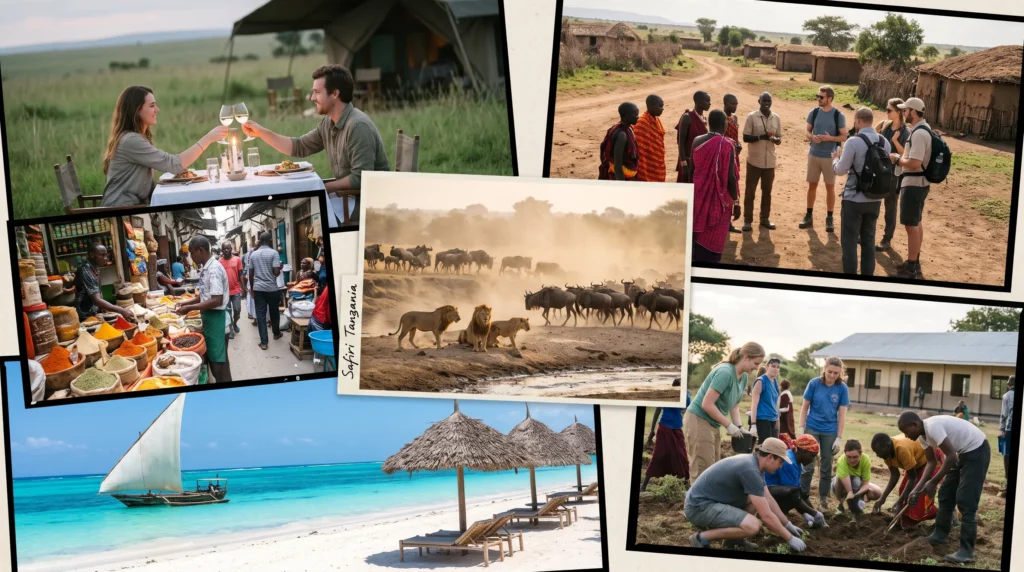
Honeymoon Safari Synergy For those celebrating a union, the balance between thrilling bush excursions and luxurious downtime is paramount. Targeting late January through February offers a unique advantage. The southern plains are blanketed in vivid green, providing a stunning, dust-free backdrop for photography. The lodges are less congested than in the peak summer months, allowing for heightened exclusivity and personalized service, while the predator action surrounding the calving herds provides daily adrenaline.
Heritage and Culinary Immersion Travelers whose primary motivation is cultural engagement should target the dry, cooler months of June and July. Interacting with local tribes, exploring rural agricultural projects, or navigating the dense alleys of coastal towns requires significant walking and outdoor exposure. The lack of precipitation ensures that remote dirt roads leading to authentic village experiences remain fully navigable, and the lower humidity makes participating in outdoor cooking classes or market tours comfortable.
Purpose-Driven Travel Voluntourism requires a delicate balance of productive labor and rewarding recreation. The shoulder month of November is strategically ideal. The slight afternoon showers cool the air, making physical community work—such as school construction or agricultural assistance—much more bearable. Furthermore, because it is slightly off-peak, volunteers can secure better rates on their subsequent safari or coastal extensions, maximizing their budget for the charitable aspects of their trip.
Hardcore Predator Tracking For the uncompromising wildlife aficionado whose sole metric of success is the frequency and intensity of apex predator sightings, late August to October is the only acceptable window. The landscape is parched, stripping away the camouflage of the bush. Surface water evaporates, forcing all wildlife to tether themselves to the remaining permanent rivers. This concentration of desperate prey and opportunistic predators creates high-stakes, highly visible hunting scenarios daily.
Coastal Seclusion If the objective is strictly marine relaxation, untethered from mainland safaris, the stretch from July through September guarantees textbook tropical conditions. The Indian Ocean trade winds create natural air conditioning along the eastern beaches, keeping the intense equatorial heat at bay. The skies are aggressively blue, and the ocean visibility is at its absolute peak for deep-water diving along the Pemba channel.
Ultra-Premium Expedition Planning When financial constraints are removed and the goal is seamless, climate-controlled perfection, September is the undisputed champion. This month offers the lowest statistical probability of rain across all national parks. Private chartered flights operate without weather delays, and the ultra-luxury mobile camps are perfectly positioned along the Mara River, offering front-row, uncompromised access to the largest wildlife spectacle on earth.