Explore Tarangire National Park
Tarangire National Park
Established in 1970 and managed by Tanzania National Parks (TANAPA), Tarangire National Park is the 6th largest national park in Tanzania and an important destination on the famous Northern Tourism Circuit. It covers an area of approximately 2,850 sq km (1,100 sq mi).
Tarangire National Park’s vegetation mainly consists of grasslands, which are flooded during the rainy season, and acacia woodlands. The landscape features a variety of swamps, river valleys, and remarkable ridges.
Although relatively small, Tarangire National Park is undoubtedly a great safari destination, boasting a high density of elephants and an impressive number of giant baobab trees.
This wonderful wildlife sanctuary gets its name from the Tarangire River, which flows across the park and serves as the major source of fresh water for animals in the ecosystem. Tarangire means “River of Warthogs.” This perennial river is said to have three sources: the highlands and escarpments of Bahati District in Manyara Region, the Irangi Hills, and the Irangi Escarpment of Kondoa District in Dodoma Region.
As the primary source of fresh drinking water in the ecosystem, the river attracts a wide variety of animals and birds.
Tarangire National Park – Essential Information
- Accessibility: Accessible by tarred road, approximately 2 hours from Arusha, or by direct small aircraft flights.
- Accommodation: Public and special campsites, lodges, hotels, and seasonal camps are available.
- Best Time to Visit: June to December, during the dry season. However, the park offers attractions throughout the year.
Tarangire National Park Wildlife
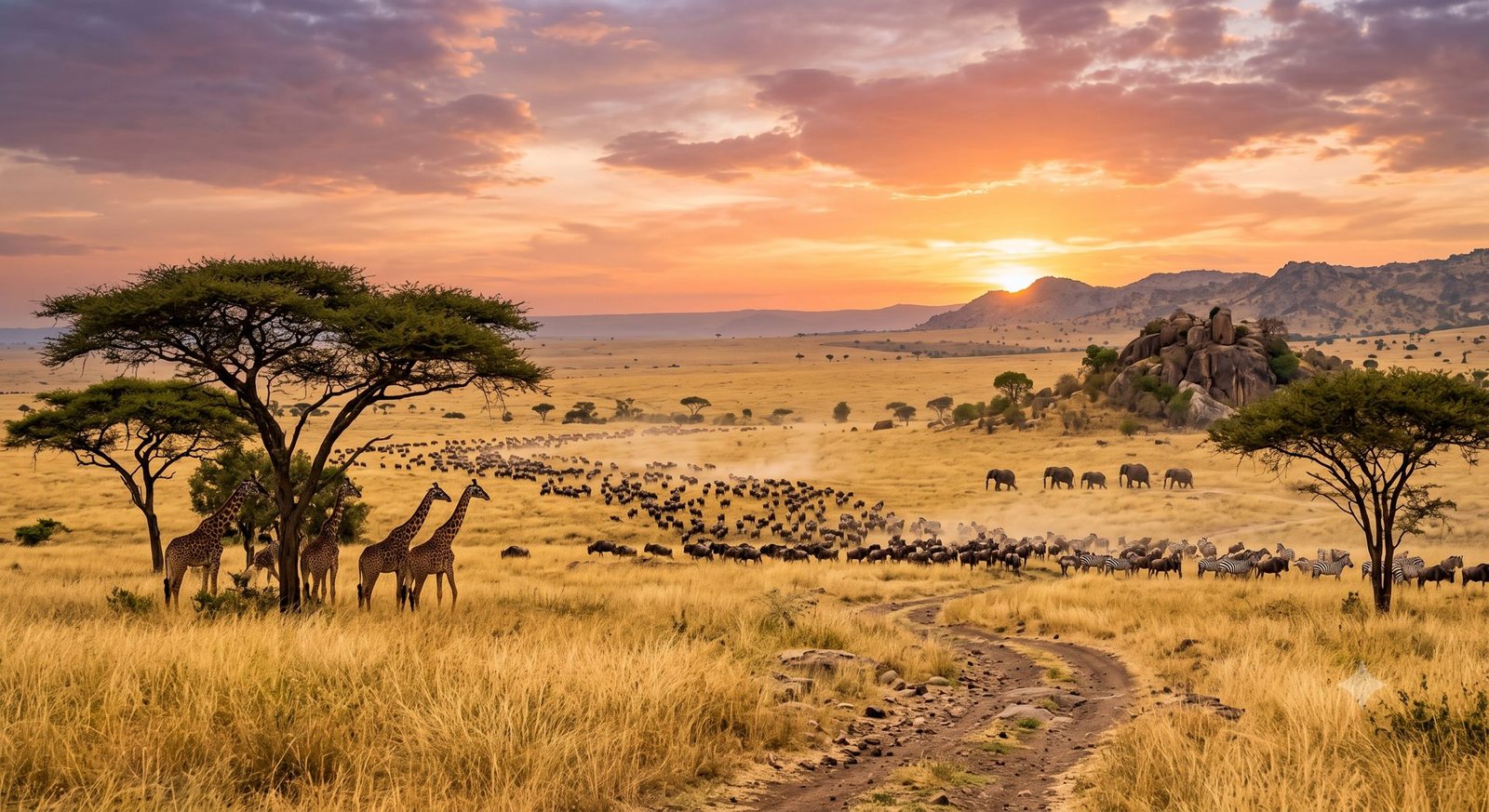
Without a doubt, Tarangire National Park is famous for its high density of elephants. Nevertheless, it is also endowed with a rich diversity of other animal and bird species.
The park boasts big cats such as lions, leopards, and cheetahs. Other wildlife includes Cape buffalo, giraffes, elands, impalas, dik-diks, wildebeests, and zebras.
Warthogs, mongooses, monkeys, and baboons are also common sights in the park.
Many visitors have the opportunity to witness exciting predator-and-prey interactions, making every safari an unforgettable experience.
Tarangire National Park Giant Baobabs
The giant baobab trees found in large numbers throughout Tarangire have earned the park a special place in Tanzania’s tourism sector.
With their imposing trunks and unique branches, baobabs are truly wonders of nature. According to an Arabian fable, the devil once pulled out a tree and replanted it upside down, explaining its unusual appearance.
Baobabs are renowned for their longevity and their ability to store large volumes of water in their thick trunks.
Their fruits contain seeds used to make refreshing beverages, while the bark and leaves are traditionally used for medicinal purposes by some communities. Little wonder that the baobab is often referred to as the “Tree of Life.”
Tarangire Attractions and Activities
Tarangire National Park offers a plethora of exciting attractions and activities. Some of the most popular experiences include:
Game Drives
Game drives provide visitors with an excellent wildlife-viewing experience. These excursions can be scheduled in the morning, afternoon, or evening, offering different opportunities to explore the park and observe its wildlife.
Birdwatching
Tarangire National Park is home to more than 500 bird species, some of which are endemic. The park also welcomes several migratory bird species, making it an excellent destination for bird enthusiasts.
Birdwatchers from around the world visit the park to enjoy its remarkable birdwatching opportunities.
Lemiyon Triangle
Located in the northernmost part of Tarangire National Park, the Lemiyon Triangle is an area characterized by its distinctive triangular shape and beautiful landscapes. It is also an excellent birdwatching site.
Poachers Hideout
The Poachers Hideout is an old baobab tree featuring a partially concealed small entrance that leads into a hollow within its giant trunk. It is located on the southwestern side of Tarangire Hill.
According to local stories, poachers used this tree as a hideout many years ago.
Matete Woodland
Matete Woodland gets its name from the tall elephant grass and spiky reeds growing along the banks of the Tarangire River.
The woodland offers excellent opportunities to spot the rare oryx antelope and is also a popular vantage point for leopard viewing.
Cultural Visits
Tarangire cultural visits give tourists an opportunity to interact with local communities and learn about their rich and diverse cultures.
Tanzania is home to more than 120 ethnic groups, making it a country with an exceptionally diverse and well-preserved cultural heritage. These visits offer a wonderful opportunity to discover the traditions, lifestyles, and customs of local communities.
Why Visit Tarangire National Park?
Another fascinating aspect of Tarangire National Park is that it is among the few parks in East Africa where visitors may see lions lounging on low-hanging tree branches, similar to the famous tree-climbing lions of Lake Manyara National Park.
A safari through Tanzania’s famous Northern Tourism Circuit is never complete without a visit to Tarangire National Park, popularly known as the “Elephant Paradise” or “Little Serengeti.”
With its magnificent elephant herds, ancient baobab trees, diverse wildlife, spectacular landscapes, and exciting safari activities, Tarangire National Park promises an unforgettable African safari experience.